Over the past two decades, mobile gaming has transformed from a simplistic pastime into a billion-dollar industry rivaling traditional consoles and PCs. What started with pixelated puzzles on monochrome screens has become a global phenomenon, complete with immersive graphics, multiplayer experiences, and virtual economies.
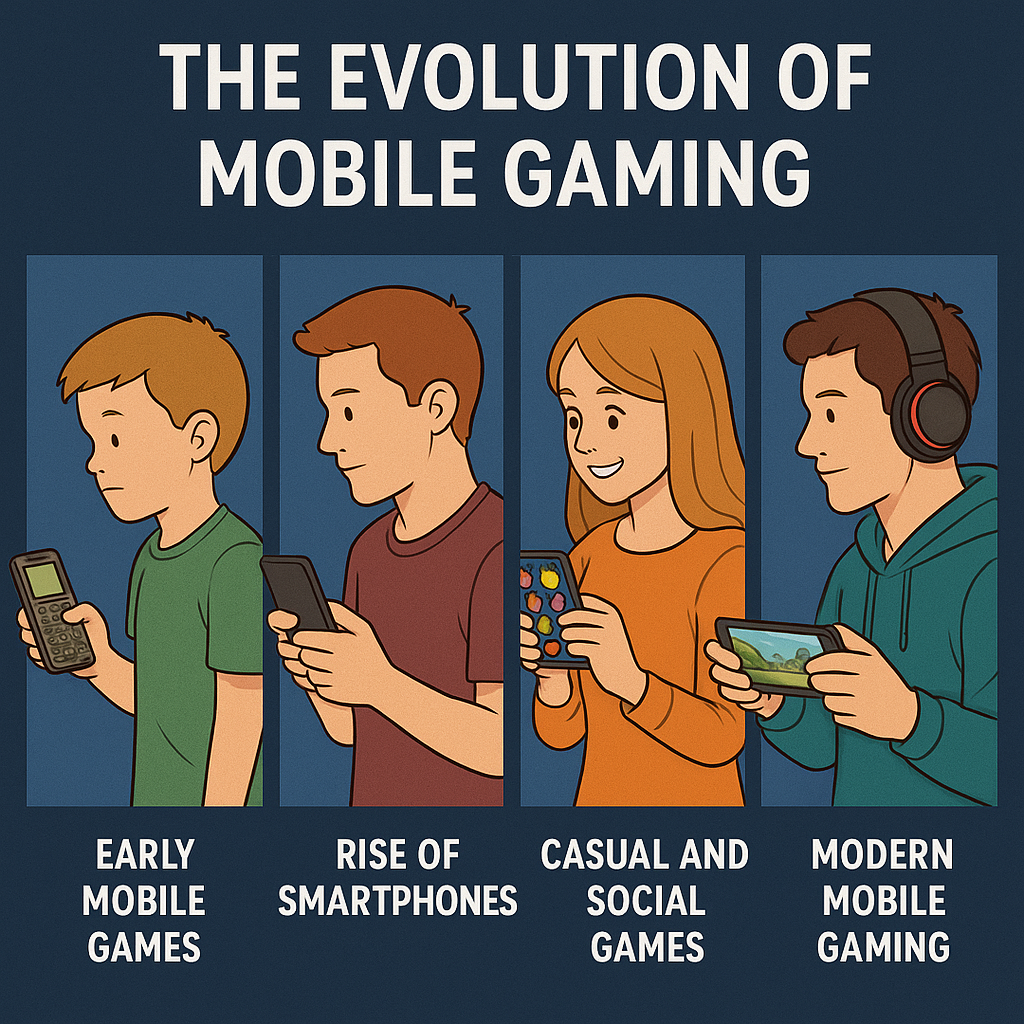
Chapter 1: The Dawn of Mobile Gaming (1997–2005)
The late '90s marked the birth of mobile gaming. While mobile phones were primarily tools for communication, Nokia's Snake changed the game—literally. Pre-installed on millions of handsets, Snake was simple yet addictive, laying the groundwork for gaming on-the-go.
Key Features:
- Basic monochrome graphics
- Keypad navigation
- Pre-installed titles
- No internet or downloadable games
Other popular games during this era included Tetris and Space Impact, both of which emphasized simplicity and fast-paced mechanics.
Chapter 2: Java and the Rise of Downloadable Games (2005–2010)
The introduction of Java (J2ME) technology allowed users to download games to their phones. This innovation opened the door to a variety of new titles, from racing games to platformers. Mobile developers like Gameloft and EA Mobile emerged as pioneers in this era.
Notable Games: Asphalt series, Prince of Persia, and Need for Speed.
Despite hardware limitations, these games provided richer experiences with better graphics and sound, attracting a larger audience.
Chapter 3: The App Store Revolution (2010–2015)
Apple’s iPhone and the App Store, launched in 2008, revolutionized mobile gaming. Suddenly, developers could reach global audiences overnight. Free-to-play models and microtransactions became dominant, turning casual titles into revenue machines.
Iconic Titles: Angry Birds, Fruit Ninja, Cut the Rope, Temple Run, Clash of Clans
This period also marked the rise of social integration in games, with Facebook logins, friend challenges, and leaderboards becoming common features.
Chapter 4: Graphics Go Hardcore (2016–2019)
As smartphones evolved, so did game complexity. High-performance GPUs enabled games with console-level visuals and controls. Genres like MOBAs, FPS, and RPGs found massive success on mobile.
Hit Games: PUBG Mobile, Mobile Legends, Call of Duty Mobile, Genshin Impact
Multiplayer modes, streaming integration, and eSports entered the mobile domain, solidifying its role in competitive gaming.
Chapter 5: Cloud Gaming and Cross-Platform Play (2020–Present)
With the rise of 5G and cloud technology, services like Xbox Cloud Gaming and NVIDIA GeForce Now began offering console-quality games on mobile. Cross-platform gaming allowed mobile users to play alongside PC and console gamers in real-time.
Games like Fortnite, Apex Legends Mobile, and Rocket League Sideswipe showcase how developers are bridging the gap between platforms and providing seamless gaming experiences.
The Monetization Shift
Monetization models evolved from paid downloads to ad-based and in-app purchase systems. Battle passes, loot boxes, and cosmetic upgrades are now standard practices across most popular games.
This model enabled companies like Supercell, King, and Tencent to earn billions annually without charging upfront costs.
The Future of Mobile Gaming
The future looks even more promising with AR, VR, AI, and blockchain integrations. Technologies like Apple's Vision Pro and Meta's Quest are poised to extend mobile gaming into mixed reality, while blockchain may revolutionize ownership with NFT-based game economies.
Predicted Trends:
- AR-based exploration games (like Pokémon GO)
- AI-generated content and storylines
- Play-to-earn gaming economies
- Mixed-reality gaming experiences
Conclusion
From the tiny monochrome screens of the late 90s to today's cinematic and competitive experiences, mobile gaming has journeyed a long way. What was once a time-killer has now become a cultural and economic powerhouse shaping the future of digital entertainment.
Written by PlayxZone