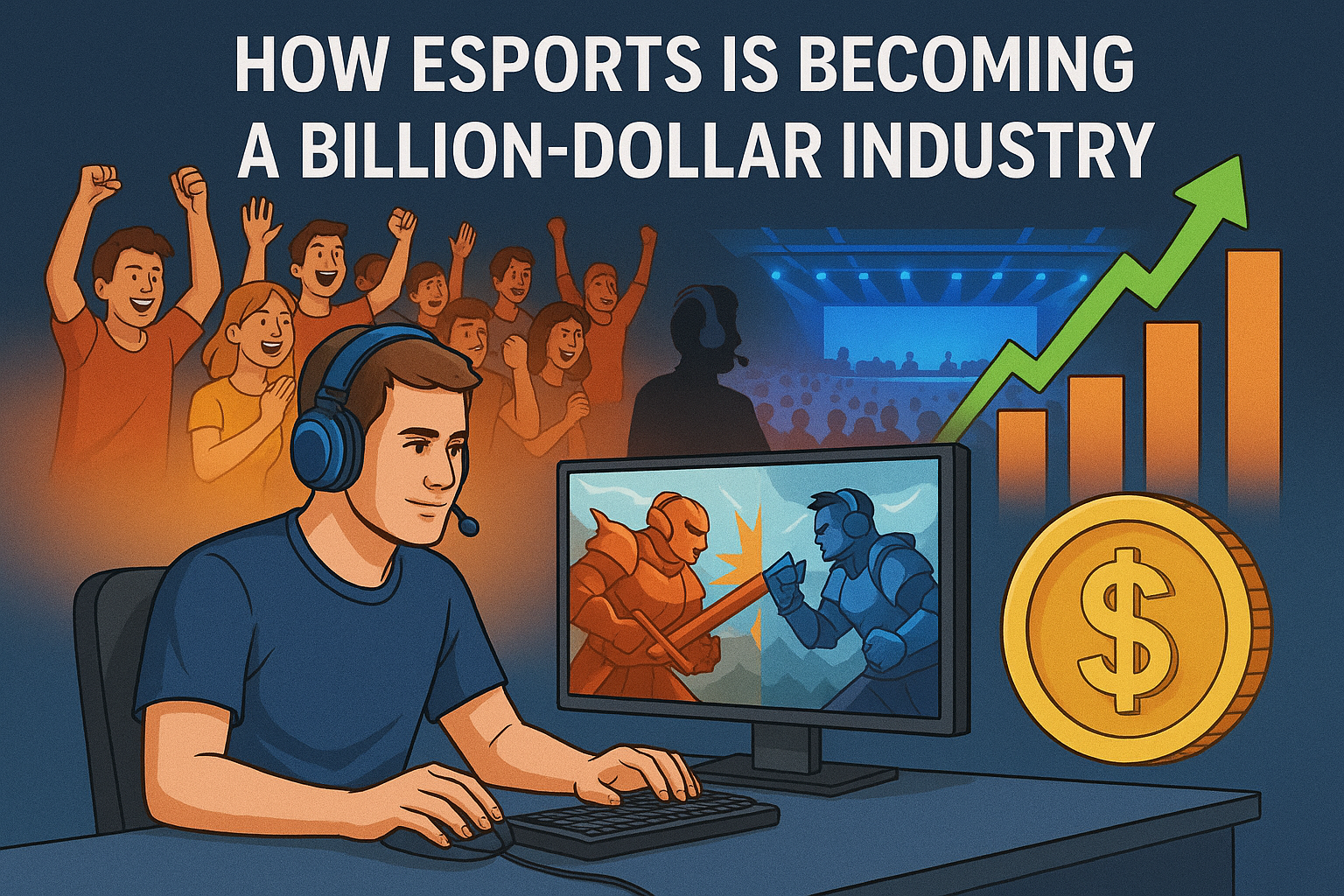
In recent years, esports has gone from being a fringe hobby to a global, billion-dollar industry. With millions of fans, colossal prize pools, and corporate sponsorships, esports now rivals traditional sports in revenue and audience engagement. But how did this transformation happen? Let’s break it down.
The Origins of Esports
The seeds of esports were planted in the 1970s and 80s, with arcade competitions and early console gaming contests. However, it wasn't until the late 1990s with the arrival of the internet that esports began to take shape. LAN parties and online matches in games like StarCraft and Counter-Strike laid the groundwork for organized competition.
The Growth Era (2010–2018)
Between 2010 and 2018, esports viewership exploded, thanks to the rise of streaming platforms like Twitch and YouTube Gaming. Titles such as League of Legends, Dota 2, and CS:GO became global phenomena.
- Dota 2's The International 2018 had a prize pool exceeding $25 million.
- League of Legends Worlds attracted over 100 million viewers.
- Esports teams began signing multimillion-dollar sponsorship deals.
The Business Behind Esports
Today, the esports economy includes revenue from game publishers, advertisements, sponsorships, media rights, and merchandise. Teams are run like traditional sports franchises with coaches, analysts, nutritionists, and even psychologists.
Major Revenue Streams:
- Sponsorships and brand partnerships
- Advertising on streams and event broadcasts
- Media rights and licensing
- Ticket sales and merchandising
- In-game monetization and battle passes
Esports Arenas and Infrastructure
With dedicated esports stadiums being built in cities like Shanghai, Las Vegas, and Seoul, the industry now has the infrastructure to support live events at scale. These venues offer cutting-edge tech, VR integrations, and capacity for thousands of fans.
Franchising and Leagues
Professional leagues such as the Overwatch League and Call of Duty League introduced a city-based franchise model similar to the NFL and NBA. This has attracted major investors including traditional sports owners and celebrities.
Esports and Education
Colleges and universities are now offering esports scholarships, building competitive teams, and incorporating gaming into their curriculum. Esports is even being considered for inclusion in future Olympic events.
The Impact of COVID-19
While COVID-19 halted many traditional sports, esports thrived. Virtual tournaments, remote broadcasts, and mobile gaming surged, expanding the audience further.
Women and Diversity in Esports
Efforts to increase inclusivity are underway. More female players, commentators, and team managers are entering the space, supported by diversity initiatives and inclusive leagues.
Global Influence
Countries like South Korea, China, and the USA dominate the scene, but regions like Latin America, Southeast Asia, and Eastern Europe are quickly catching up. Multilingual broadcasts and mobile-first platforms have made esports universally accessible.
Future Predictions
- Integration with VR/AR experiences
- Blockchain-based ownership of in-game items and rewards
- Cross-media storytelling between games, film, and live events
- More structured youth leagues and developmental systems
Conclusion
Esports has proven it's more than a trend—it's a revolution. As technology continues to evolve and the global fanbase expands, the esports industry is poised to surpass $2 billion in annual revenue within the next few years. Whether you’re a gamer, investor, or fan, the future of esports is bright—and lucrative.
Written by PlayxZone